Written by: Brielle Regdos, Content Writer
Every business produces a large amount of financial data, and often business owners find themselves struggling to make sense of it all. A simple, well-built dashboard is a tool that puts your most important numbers in one place so you can quickly assess the current state of your business. Dashboards are highly customizable and can contain many things relevant to a particular business, but there are a few things from a financial perspective that are critical to keep at the forefront.

A good place to start is cash flow. Cash is what keeps your business running day to day. Your dashboard should show how much cash you have now, what money is coming in, and what bills are coming up. Knowing how much cash you need on a daily basis and adding a short-term forecast helps you plan ahead and avoid surprises. Without a clear view of cash, even profitable businesses can face problems.
Next, look at profitability. It’s not just about how much you make, but how much you keep. Your dashboard should include key numbers like gross profit, net profit, and profit margins. Breaking these down by project, product, or service helps you see what’s actually making you money and what needs attention. This also makes it easier to spot areas where efficiencies could be found.
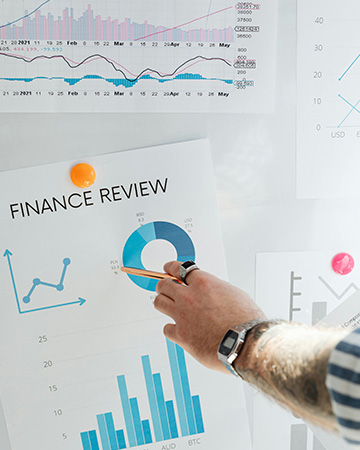
Dashboards are also useful to track trends over time. Looking at your numbers in month-over-month or year-over-year views can help you spot patterns, seasonal changes, or potential issues early. Simple charts and visuals make this easier to understand and act on, so you’re not just reacting but actively planning ahead.
You can take it a step further by setting targets or benchmarks within your dashboard. This makes it easy to see if you’re on track and quickly identify where adjustments are needed, turning your dashboard into a practical decision-making tool.
Automation should be a major focus in creating a dashboard. Instead of manually updating spreadsheets, connecting your accounting and operational systems can keep everything current and accurate. This saves time, reduces errors, and ensures everyone on your team is working from the same information.
Finally, keep your dashboard practical. Focus on the numbers that truly drive your business, and review them regularly, whether that be weekly or monthly. A good dashboard doesn’t just show data, but helps you understand what’s happening and what to do next, so you can make smarter decisions and grow with confidence.
For many business owners, building and maintaining this level of financial visibility can be challenging to do alone. Working with a bookkeeping or outsourced CFO service can help ensure your data is accurate, your dashboard is set up correctly, and your numbers are actually being used to guide decisions, not just reviewed after the fact.
How enTune Can Help:
At enTune Accounting and Business Solutions we can make this process much easier and more effective. Instead of trying to piece together reports on your own, we help organize your financial data into clear, easy-to-use dashboards tailored to your business. By ensuring your numbers are accurate, up to date, and presented in a way that highlights cash flow, profitability, and trends, we turn your finances into a practical tool for decision-making. Beyond setup, we also provide ongoing insight and guidance, helping you understand what the numbers mean and how to act on them, so you’re not just tracking performance, but actively improving it.